
Arrest Records in Hampden County
An arrest record is created at booking. After police take a person into custody, the booking process records identity, the alleged charges, fingerprints, and a photo. In Hampden County, an arrest can be made by a city police department, the Massachusetts State Police, sheriff's deputies, or another agency, and the arrest report stays with the agency that made it.
An arrest record is not a conviction, and it is not the court file. The court record begins only after charges are filed and the case is arraigned. For the full case history, the Hampden County court records page covers the docket side. The Hampden District Attorney prosecutes serious cases for the county and runs victim services.
The Hampden District Attorney's office handles charging decisions, prosecution, and appeals across the county, as shown on the Hampden District Attorney site.

That office, not the police, decides which arrests move forward as criminal charges.
How to Search Hampden County Arrest Records
There is no countywide public arrest database to type a name into. Instead, you piece the record together. A recent arrest usually surfaces first as an arraignment on the court docket, then as an agency report you must request.
- Search MassCourts for the criminal case, which shows the arraignment and charges once filed.
- Contact the arresting police department for the arrest report or daily log, requested under the public-records law.
- Request your own official criminal history through the state CORI process.
- Check custody and notifications through the Sheriff's Office or VINELink if the person may still be held.
The arrest report itself stays with the police. To get it, send a written public-records request to the department that made the arrest, and name the date, the person, and the type of record. Active investigations, juvenile cases, and victim details can be withheld, so part of a report may come back redacted. Timing varies by department, and a clear, narrow request usually comes back faster and cheaper.
Official criminal history is a state product called CORI, which is separate from any court docket and is governed by its own rules.
Arrest Records vs. Criminal Court Records
The arrest and the court case are two records, made at two stages, by two different offices. An arrest happens at booking. The court record opens when charges are filed and the case is arraigned. One can exist without the other, since not every arrest leads to charges.
| Arrest Record | Criminal Court Record | |
|---|---|---|
| Source | Police or Sheriff | Court Clerk |
| Created When | Booking | Charges filed |
| Contents | Booking info, alleged charges, photo | Pleadings, motions, disposition |
Charges vs. Convictions
A charge is an accusation. A conviction is a finding of guilt by plea or verdict. The gap between them matters, because many charges end in dismissal, a not-guilty finding, or a continuance without a finding. Treating a charge as proof of guilt is both unfair and, for hiring or housing, legally risky.
| Charge | Conviction | |
|---|---|---|
| Stage | Accusation | Verdict or plea |
| Burden of Proof | Probable cause | Beyond a reasonable doubt |
| On the Docket | Listed as filed | Listed as disposition |
Sealed vs. Expunged Records in Hampden County
Massachusetts lets people limit access to old records, but the two paths differ. Sealing hides a record from ordinary public view while keeping it in existence for limited uses. Expungement removes it under statute and is treated as if it never existed. Sealing covers more situations; expungement is narrow and technical.
| Sealed | Expunged | |
|---|---|---|
| Visibility | Hidden from public view | Removed under statute |
| Law Enforcement | Limited access remains | Very limited access |
| Eligibility | Convictions after a waiting period; many nonconvictions | Narrow categories, often by age, error, or decriminalized conduct |
Conviction sealing follows M.G.L. c. 276, § 100A, nonconviction sealing follows § 100C, and expungement eligibility sits in § 100K. Eligibility is technical, so people with serious or multiple records should get legal help.
Mugshots and Booking Photos
Massachusetts does not run a public statewide mugshot database. A booking photo may sit inside a police record, where access depends on public-records exemptions, an active investigation, and privacy concerns. The Sheriff's Office does not publish a public photo roster either.
Be careful with third-party mugshot sites. They are often outdated, charge removal fees, and are not official records. For a real status, use the court docket and the arresting agency, not a private photo site.
Statewide Criminal Records and CORI
Official criminal history in Massachusetts is called CORI, short for Criminal Offender Record Information. It is maintained by the state Department of Criminal Justice Information Services and controlled by M.G.L. c. 6, § 172. CORI is not the same as a MassCourts docket search. Employers, landlords, and licensing bodies have different levels of access, and they must follow CORI rules.
An individual can request their own CORI through the state, which is the cleanest way to see an official record, as explained on the request CORI as an individual page.
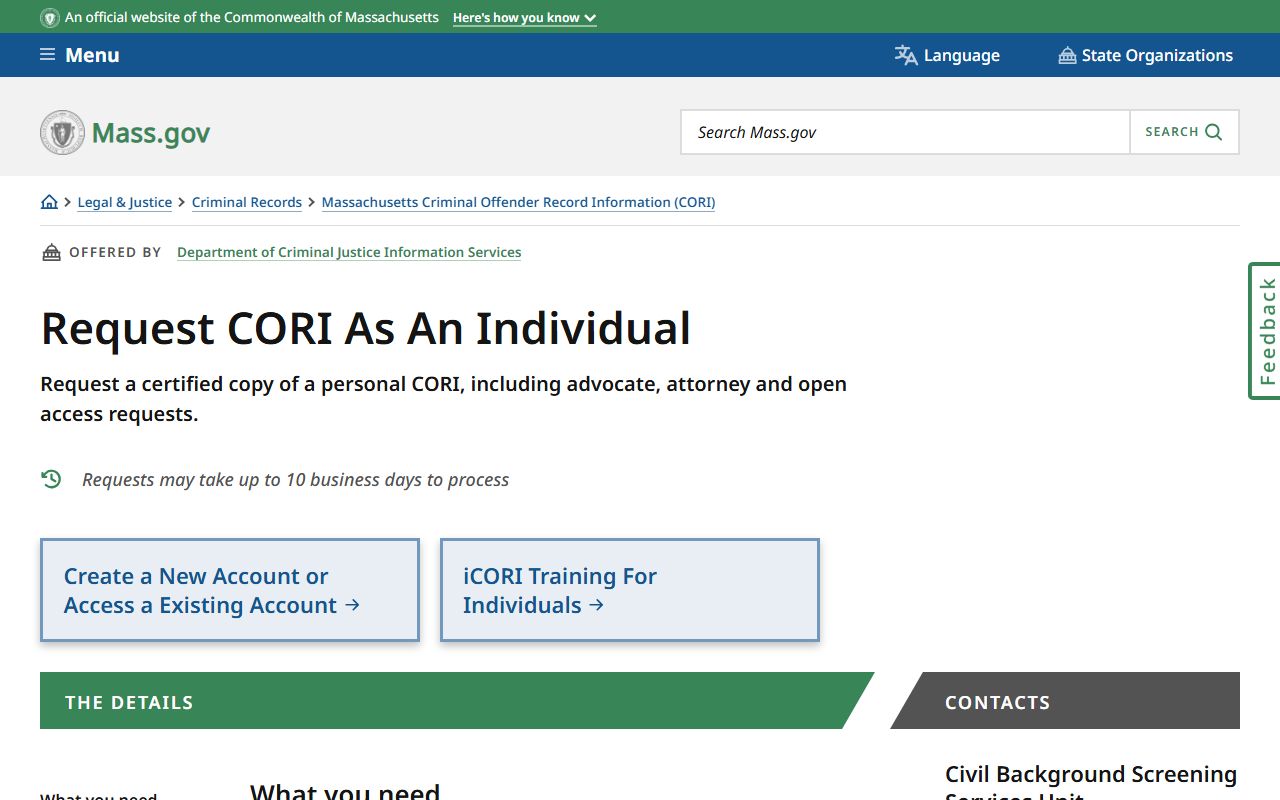
Requesting your own CORI is also a smart first step before any job or housing application that may include a background check.
Background Check Considerations
A casual name search is not a background check. A lawful background check for employment, housing, or credit must follow the federal Fair Credit Reporting Act and Massachusetts CORI rules. Using a docket search or a third-party site for those decisions can break the law.
Important: This site is not a consumer reporting agency under the FCRA, and its information may not be used for employment, housing, credit, or insurance decisions.
Restricted Criminal Records in Hampden County
Several categories stay closed. Juvenile delinquency records are confidential under M.G.L. c. 119, § 60A, and the Juvenile Court is built around that privacy. Sealed and expunged records do not show in ordinary searches. Active-investigation materials can be withheld, and grand-jury proceedings are secret even when an indictment later becomes public.
The Juvenile Court department handles delinquency and child-welfare matters with strict confidentiality, as described on the Juvenile Court overview.
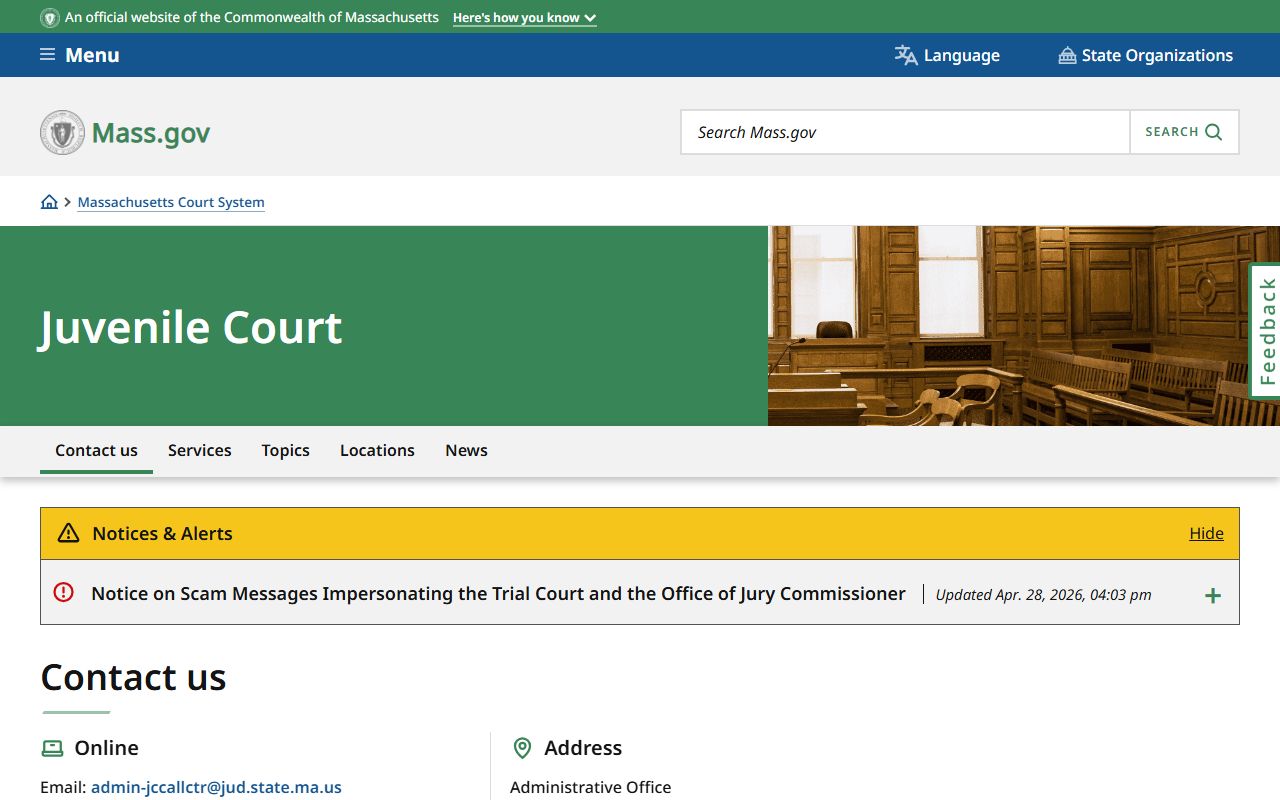
Because of those rules, a juvenile case will rarely appear in a public arrest or court search.
Federal Criminal Cases
Some arrests lead to federal charges instead of state ones. Federal crimes in the region are prosecuted by the U.S. Attorney for the District of Massachusetts, and those cases run in federal court, not MassCourts.
The federal prosecutor for the district publishes case news and office information at the U.S. Attorney for the District of Massachusetts site.
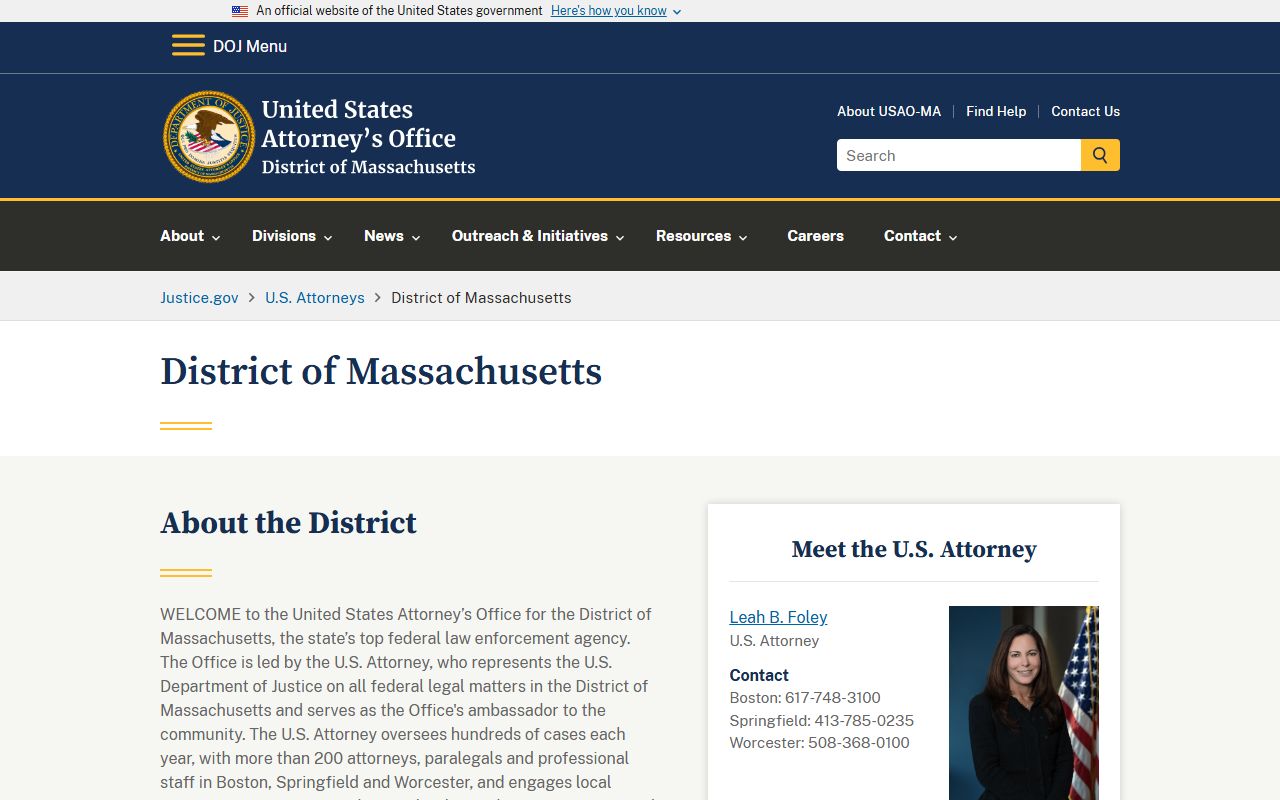
For federal custody, the Bureau of Prisons locator and PACER replace the state tools used for county cases.
Victim and Defense Resources
Both sides of a case have help. The District Attorney's victim witness unit explains court dates, restitution, safety planning, and victim rights, with details on the Hampden DA victim witness page.
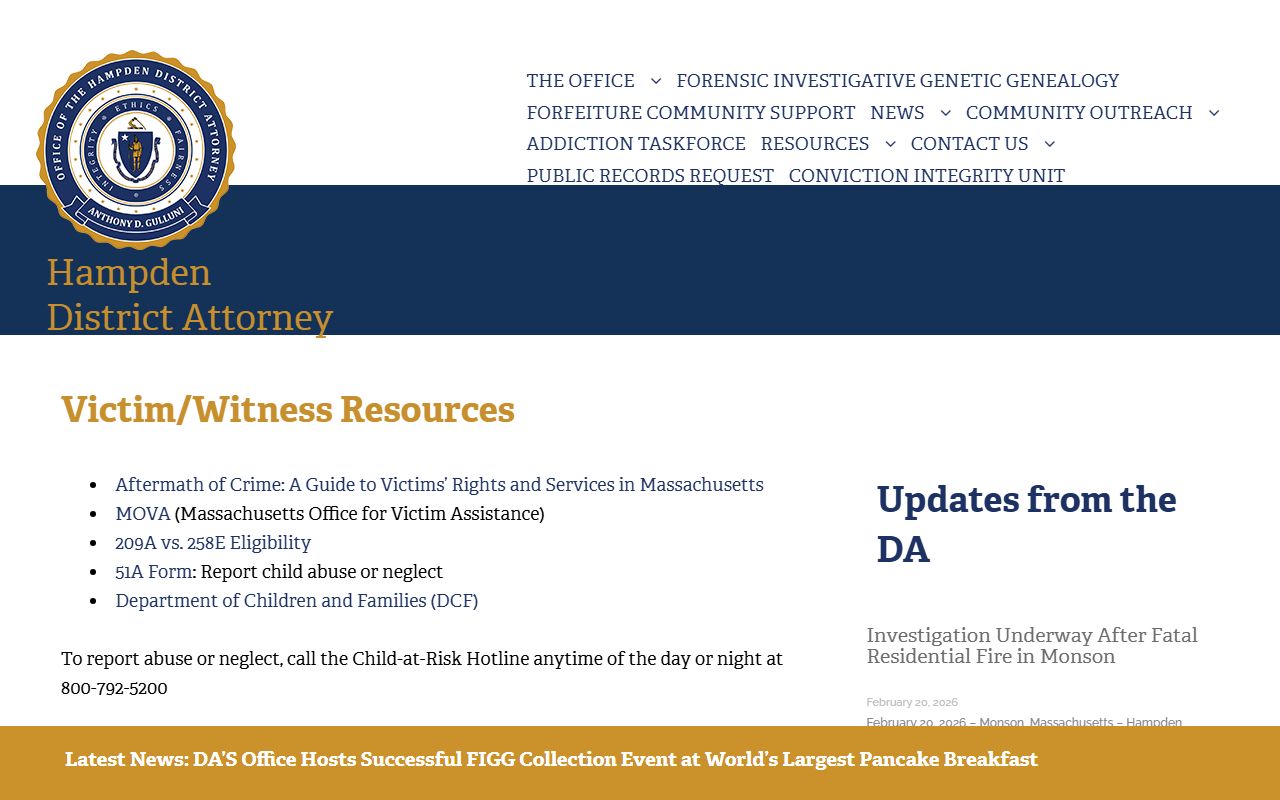
On the defense side, people who cannot afford a lawyer can request counsel through the Committee for Public Counsel Services, usually at arraignment.