
The Massachusetts Public Records Law
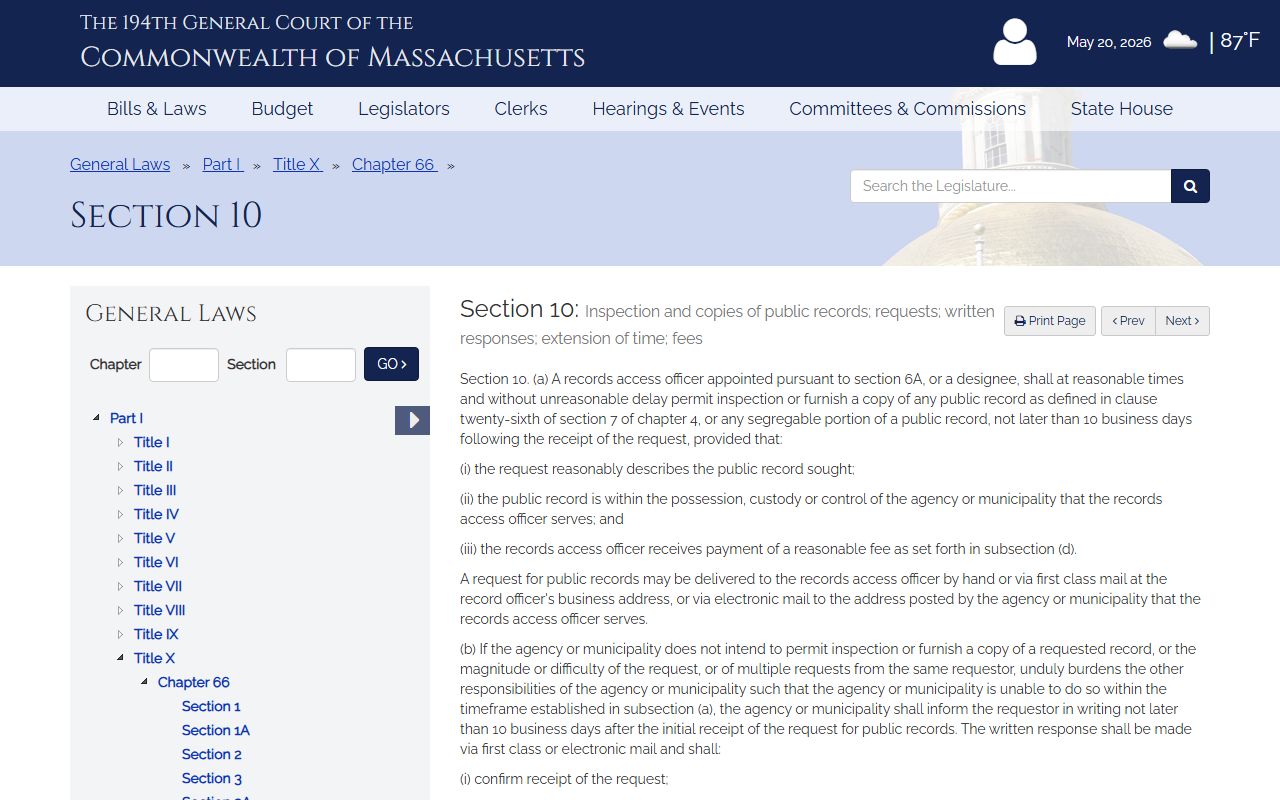
Massachusetts gives the public a right to inspect and copy government records. The core request statute is M.G.L. c. 66, § 10, which sets out how to ask, how an agency must respond, and what fees may apply. The definition of a public record, and the list of exemptions, lives in M.G.L. c. 4, § 7.
The text of the request statute is published by the Legislature, and it is worth reading before a dispute starts.
Anyone can file a request, and you do not have to say why you want the record. The Secretary of the Commonwealth publishes a plain guide to the law that walks through the whole process.
That guide explains rights, deadlines, and appeals in everyday language on the Secretary of the Commonwealth public-records page.
It is the best first stop before sending a request to any Hampden County agency.
Public Records vs Court Records in Hampden County
This is the distinction that trips people up. The public-records law covers executive and municipal agencies, like a police department or the Sheriff's Office. It does not cover court case files. A docket, pleading, or transcript is obtained through the court clerk or register under court access rules, not through a public-records request.
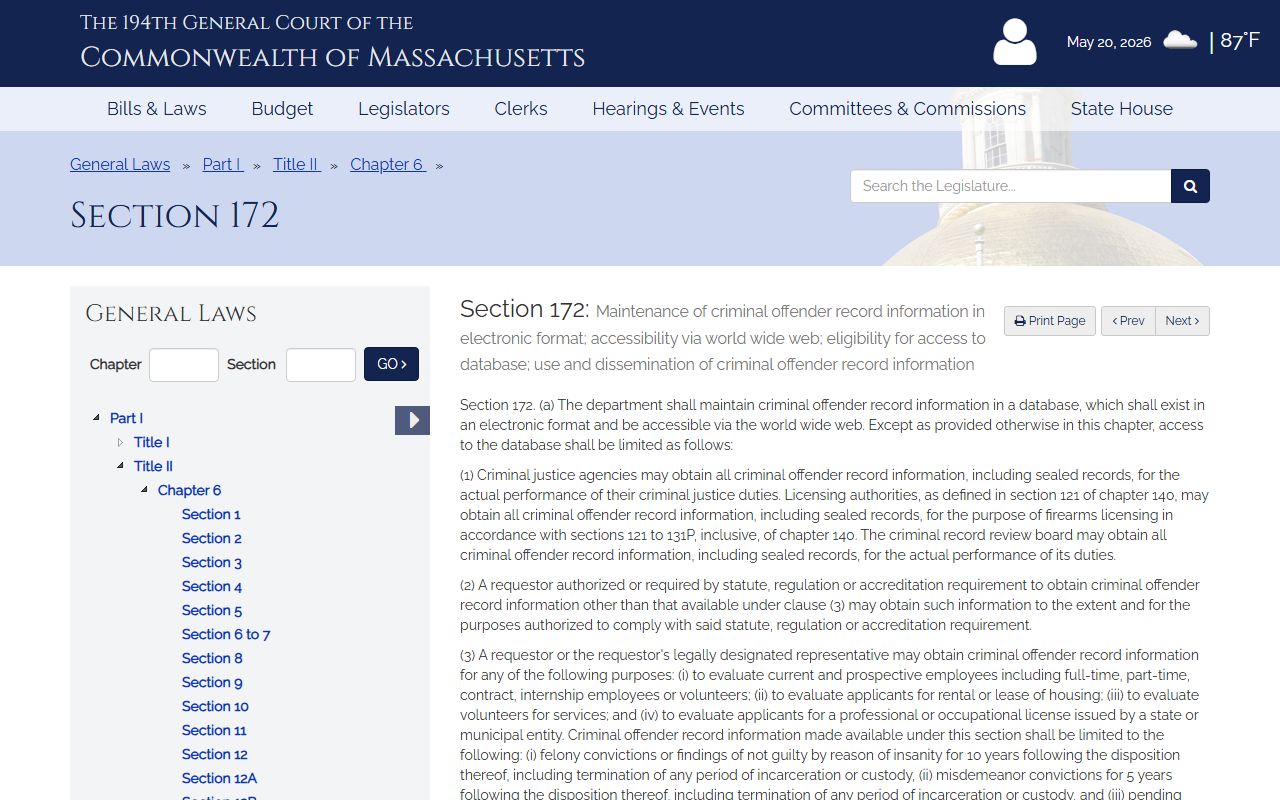
Criminal history is a third lane. CORI is controlled by the Department of Criminal Justice Information Services under M.G.L. c. 6, § 172, and a public-records request will not produce someone's CORI.
For court files, see the Hampden County court records page instead, since those are released by the clerk, not under the public-records law.
What Records Are Public in Hampden County
Different offices hold different records, and many are not court files at all. Some sit with cities and towns, some with the Sheriff, and some with separate state systems. Common public records include the following.
- Police incident logs and reports, subject to exemptions, from city and town departments.
- Sheriff's Office policies, contracts, and aggregate jail reports.
- Land records, such as deeds and mortgages, from the Registry of Deeds.
- Marriage and other vital records, from city or town clerks and the state registry.
- Municipal records, such as meeting minutes, budgets, and permits.
Land records and vital records use their own search systems and are not requested through a general public-records letter.
How to File a Public Records Request in Hampden County
A good request is specific and goes to the right office. Vague, sweeping requests invite delay, high fee estimates, and exemption claims. Aim the request at the agency that actually holds the record.
- Identify the office that keeps the record, such as a police department or the Sheriff.
- Describe the records clearly, with a date range and record type.
- Submit by email, mail, or an agency portal, and ask for electronic delivery.
- Wait for the response within the time the law allows.
- Pay any reasonable fee, and narrow the request if the estimate is high.
A strong example: "All current written visitation policies of the Hampden County Sheriff's Office, active as of the request date."
Public Records Request Form Fields
Massachusetts agencies often accept a simple letter or email, but a complete request includes the fields below. They help the office find the record and reach you with a response.
| Field | Required | Notes |
|---|---|---|
| Requester Name | Usually yes | Contact information is needed for a response. |
| Email / Mailing Address | Yes for response | Electronic delivery often reduces fees. |
| Agency / Office | Yes | Name the specific department that holds the record. |
| Record Description | Yes | Be specific: title, report year, facility. |
| Date Range | Strongly recommended | Limits search time and fees. |
| Preferred Format | Optional | PDF, spreadsheet, inspection, or paper. |
| Fee Limit | Optional | Ask for an estimate before costs exceed a set amount. |
Response Timelines
Massachusetts law requires an agency to respond promptly and within the period the statute sets, then to produce records or explain any withholding. An agency can sometimes seek more time for a large or complex request. Save the date you sent the request, any tracking number, and the response deadline, since those matter if you later appeal.
Public Records Fees in Hampden County
Public-records fees must be reasonable and follow the statewide regulations. There is no single county price list, and amounts depend on the format and the work involved. The table shows how fees are set rather than fixed dollar figures.
| Item | How It Is Set |
|---|---|
| Copies | A reasonable per-page fee set by regulation. |
| Search and segregation time | Hourly, with limits fixed by the public-records rules. |
| Electronic records | Often lower cost; ask for email delivery. |
| Fee waiver or reduction | Available where disclosure serves the public interest. |
Ask for a fee estimate before processing, and request a waiver where the public interest supports it.
Records That Are Exempt
Not everything is public. The exemptions in M.G.L. c. 4, § 7 protect categories such as personal privacy, active law-enforcement investigations, medical and personnel files, trade secrets, and records made confidential by other statutes. Criminal history under CORI and sealed records are protected as well.
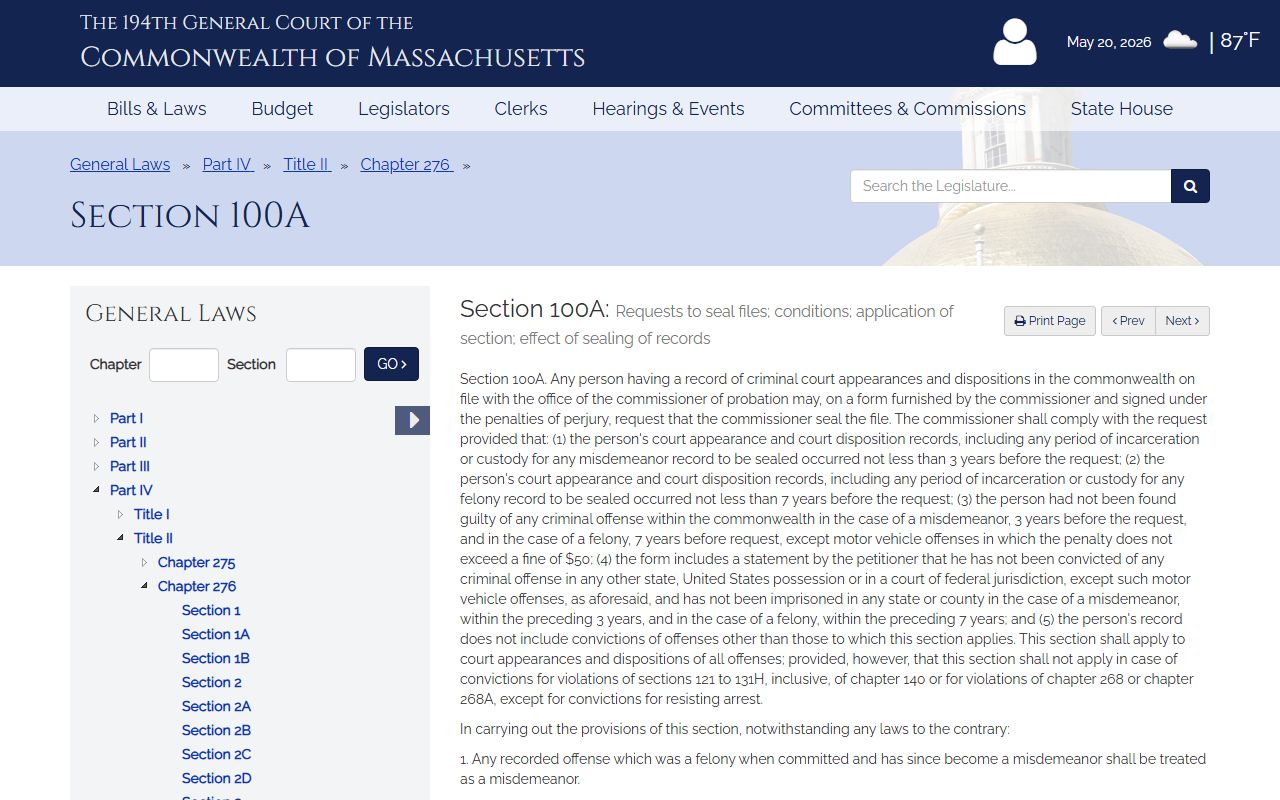
Sealing law also limits what surfaces. Conviction sealing under M.G.L. c. 276, § 100A keeps a record out of ordinary public view, which is one more reason a public-records request will not always return everything that once existed.
When an agency withholds part of a record, it must point to the exemption it relies on.
Requesting Sheriff and Jail Records
The Sheriff's Office does not publish a public jail roster, so a public-records request is the lawful route for many jail-related documents. The agency has a Records Access Officer for exactly this purpose. Keep the request narrow: name the record type, the year, the facility, and the format.
Aggregate reports work best. Asking for "the average daily population by month for a calendar year, by facility" is more likely to be released than "all records about every inmate." Avoid requesting confidential medical, juvenile, or victim information, which the law protects.
If Your Request Is Denied
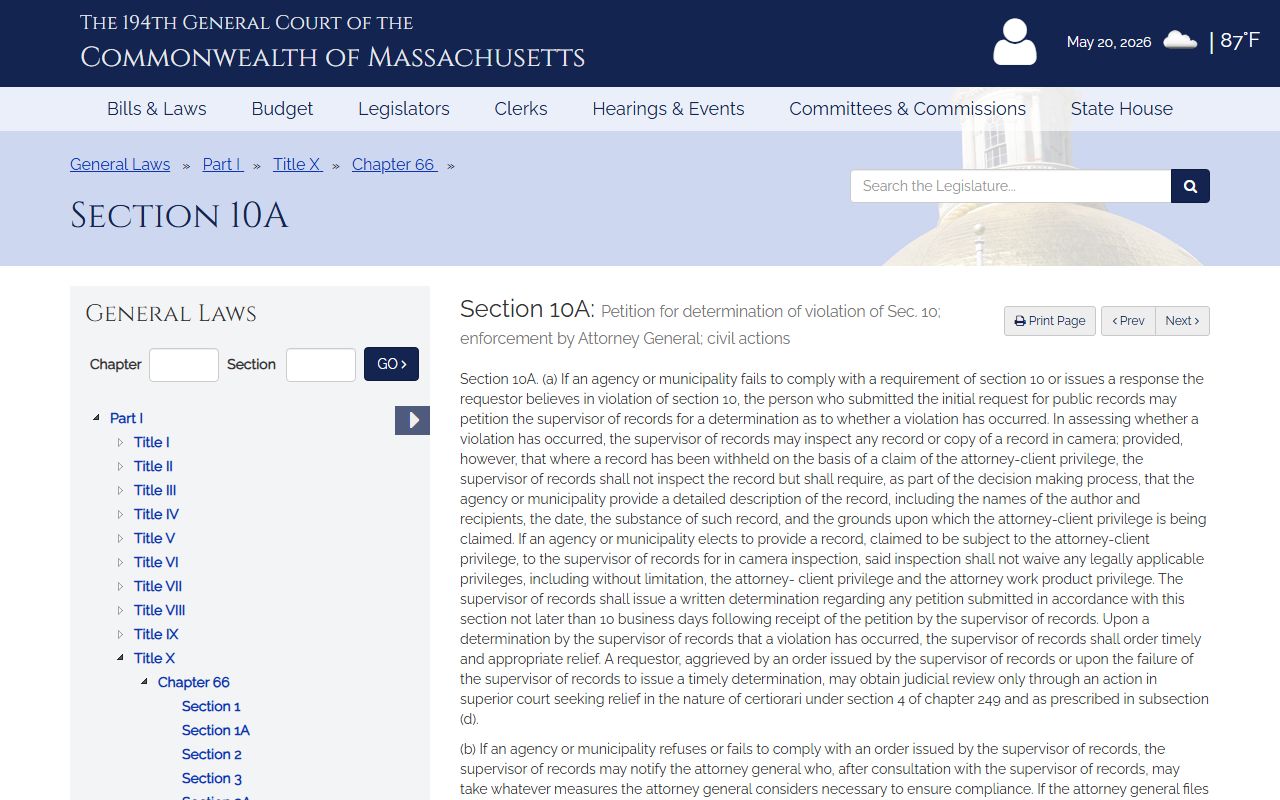
Massachusetts gives requesters an appeal path. If an agency denies a request, charges an unreasonable fee, or fails to respond, you can seek review through the Supervisor of Records and, if needed, in court. That enforcement framework sits in M.G.L. c. 66, § 10A.
One limit applies: if the denial concerns a court case file, the answer lies in court access and impoundment rules, not the Supervisor of Records.