
What the Housing Court Does
Housing Court is one of seven Massachusetts Trial Court departments. It is a specialty court built for housing cases: summary process evictions, code enforcement, sanitary-code issues, receiverships, and other housing-related civil matters. It serves Hampden County through the Western Housing Court, with a session in Springfield.
The department publishes its overview and location resources at the Housing Court Mass.gov page.
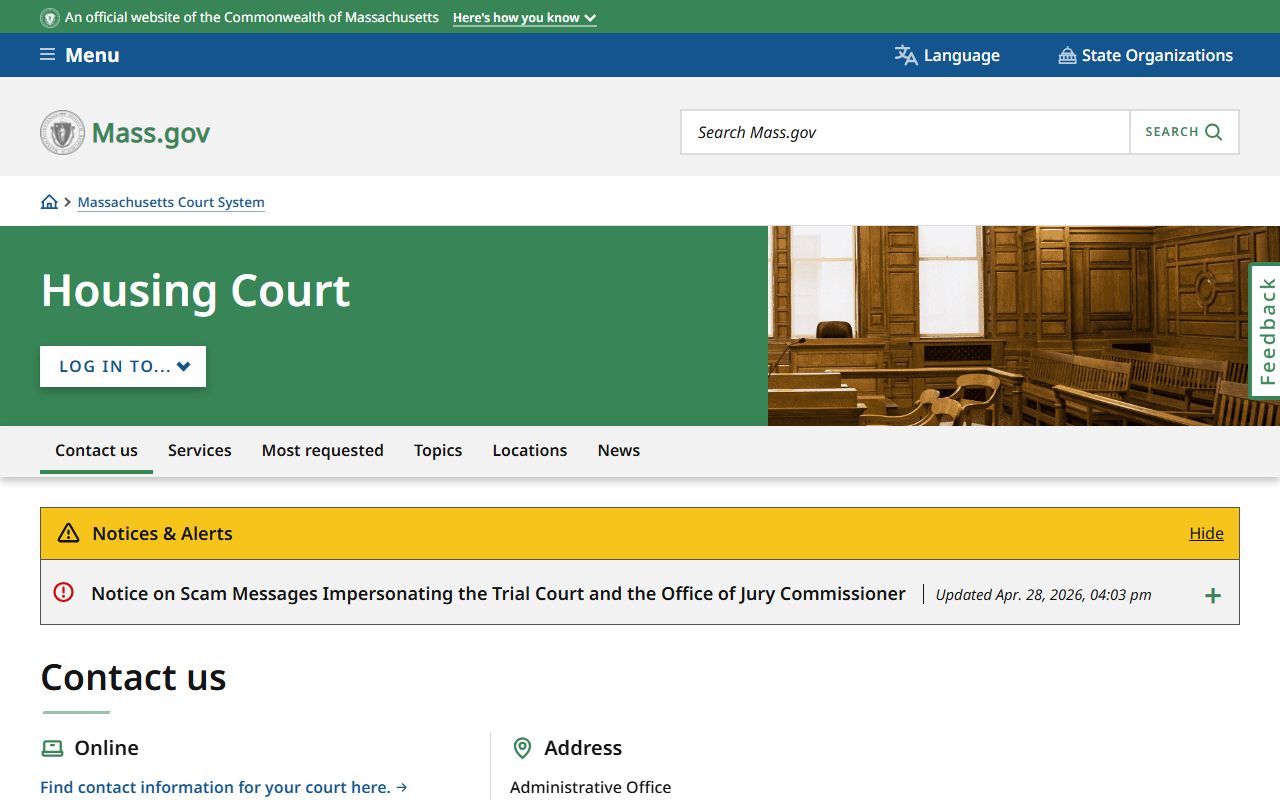
Housing Court is busy in western Massachusetts because older urban housing stock, code enforcement, and landlord-tenant disputes generate specialized litigation.
Western Housing Court Springfield Session
The Hampden County session sits inside the Roderick L. Ireland Courthouse at 50 State Street in Springfield, shared with Superior Court, the Probate and Family Court, and Springfield District Court. The Housing Court clerk runs a separate counter from those other departments.
Confirm public hours and contact information on the Western Housing Court Springfield Session page.
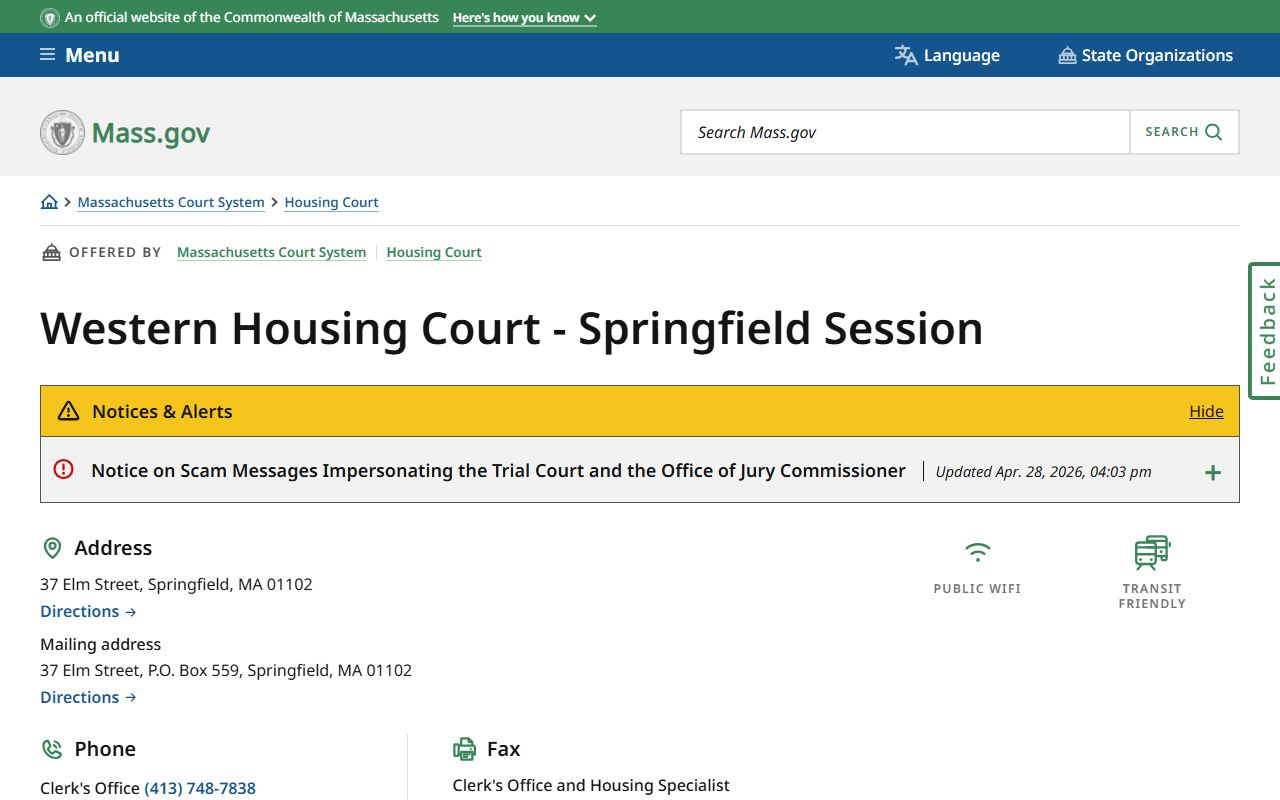
Western Housing Court (Springfield)
50 State Street
Springfield, MA 01103
Roderick L. Ireland Courthouse
Cases Heard in the Housing Court
Housing Court covers more than evictions, though evictions are the largest category. The court also handles housing-condition cases brought by tenants or municipalities, receiverships for distressed properties, and other civil matters tied to housing.
- Summary process evictions for nonpayment, no-fault, and cause grounds.
- Tenant claims about housing conditions, repairs, and sanitary code.
- Municipal enforcement actions on building or sanitary code.
- Receivership cases for properties in serious disrepair.
- Some civil claims and small claims with a housing connection.
What a Hampden Housing Court Docket Shows
A housing docket reads much like other court dockets, with a few housing-specific entries. The table lists the most common items.
| Entry | What It Shows |
|---|---|
| Notice to quit | The pre-suit notice the landlord served. |
| Complaint and summons | The case opening filings. |
| Answer and counterclaim | The tenant's response, including conditions claims. |
| Mediation or agreement | A settlement reached with court help. |
| Judgment | The court's final decision. |
| Motion to issue execution | The order needed to enforce a possession judgment. |
How to Search Hampden Housing Court Records
Housing dockets are searched through MassCourts, the statewide public case system. Pick Housing Court and the Western Housing Court Springfield Session, then search by name or case number.
- Open the MassCourts eAccess portal.
- Pick Housing Court and the Springfield session.
- Search by party name, business name, or case number.
- Open the case and review the docket for status and orders.
- Contact the Housing Court clerk for documents not online.
Housing Court vs District Court for Housing Matters
Some housing matters can be filed in District Court instead of Housing Court, depending on facts and venue. Housing Court has special rules and forms designed for landlord-tenant cases. A tenant or landlord can sometimes transfer a case between the two courts. The Housing Court clerk can explain what fits, and the court records page covers general state-court search.
Public Access and Limits
Most Housing Court dockets are publicly searchable, though sensitive details can be redacted, and some matters may be impounded. Eviction filings carry real privacy weight, since past filings can affect future rentals. Tenants and landlords with privacy concerns should ask the court about impoundment and sealing rules.
Legal Help for Housing Court Cases
Many self-represented parties appear in Housing Court. Community Legal Aid handles civil legal services for western Massachusetts, including housing matters, for people who qualify. Court service centers and Mass.gov self-help resources also publish forms and procedural information. Court staff can explain process but cannot give legal advice.
How a Hampden County Summary Process Case Moves
Summary process is the formal name for an eviction case. It runs faster than ordinary civil litigation, but it still follows clear steps. Understanding the order helps both landlords and tenants prepare.
- The landlord serves a notice to quit before filing.
- If the tenant does not cure or leave, the landlord files a summary process complaint and summons.
- The tenant files an answer and any counterclaims about conditions or other defenses.
- The court schedules a first event, often a case management or mediation date.
- The case is decided by agreement, trial, or default.
- If the landlord wins possession, the court issues an execution that must be served to remove the tenant.
Tenants often negotiate move-out dates or payment plans through mediation rather than going to trial. The agreement is then entered as a court order.
Tenant and Landlord Resources
Western Massachusetts has several resources for housing cases. Community Legal Aid handles civil legal services for tenants who qualify. Local housing nonprofits and city offices help with rental assistance, mediation, and code complaints. Landlords often work with bar association referral services or private counsel. Mass.gov also publishes forms and procedural guides for self-represented parties on the Housing Court department page.
The Massachusetts Trial Court has invested in court service centers that help self-represented parties understand the forms, court rules, and where to file. Court staff can explain procedure but cannot give legal advice or take sides.
Many Hampden County tenants and landlords go through Housing Court without a lawyer, especially in straightforward eviction matters. Mediation can settle a large share of cases before trial, and the Trial Court actively encourages it as a way to reach agreements that work for both sides. A negotiated agreement, once entered as a court order, has the same effect as a judgment after trial. The court can also enforce the agreement later if a party fails to follow it, which is one reason mediated outcomes hold up better than informal handshakes outside court. Tenants facing eviction should ask about mediation services and legal-aid referrals at the first court date, not after a default has already entered. A default raises the bar and shortens the time to act, since the court can move toward judgment without further notice once a default enters.
Search Tips for Hampden Housing Court
Some housing matters are easy to find by name, while others are easier to find by address. Search tips that work for tenant or landlord lookups include the following.
- Search by party name first, with maiden names or business names if needed.
- Use a date range to trim long lists, especially for common surnames.
- Confirm the right session, since Housing Court sessions cover different counties.
- Use the exact case number from a notice when you have it.
- Call the clerk if a recent filing is missing online.